
Greeting
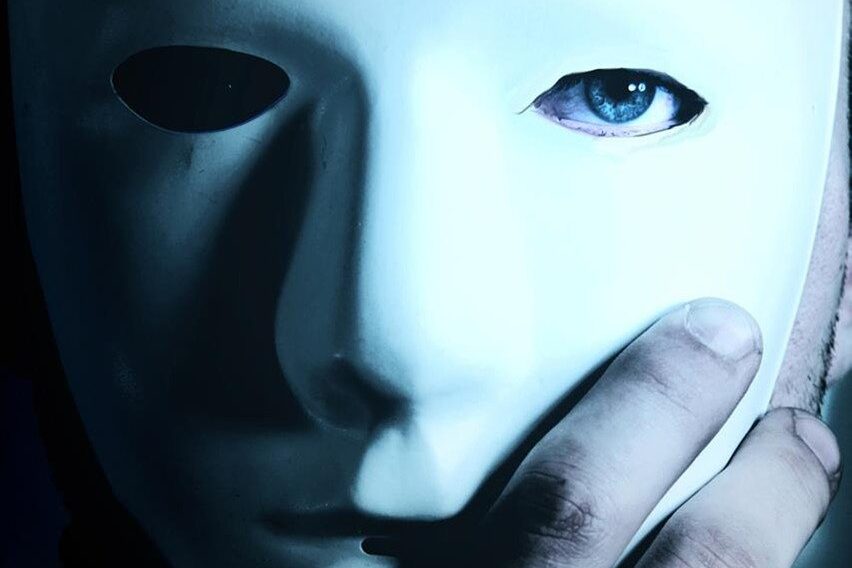
Masks were used to control slaves. I suspect this allowed the owner to feel better about ‘ownership of another human being. The masks rendered the slave anonymous. An even more outrageous practice overcame the dissonance created by the unnatural ownership. This was the forceful wearing of the iron muzzle. Masks and uniforms can also have another effect on the wearer.
Aggression and Responsibility
The mask creates a reduction in responsibility. Daniel Natal reveals this in his presentation, ‘The Mask and Empathy’. He explains that an experiment conducted by Stanford Prison concluded that wearing a uniform changed the behaviour of participants. They became more aggressive. Does that mean American police should not be wearing uniforms? Of course, the American policing problem is more complex than to wear or not to wear a uniform. However, the mask may explain the particular brand of vicious that the Ku KLUX Klan practiced. Also interesting are the many uniformed groups in the recent storming of the US State Capitol. The anonymity gave them the aggression they needed, but must also have made it much easier for investigators to track them.
Children Read Faces
In a previous article, I applauded the ability we have to show empathy to a stranger by the simple greeting, ‘Sawubona’. This translates from isiZulu as, ‘I see you’. In the gradual movement of people towards each other due to progress, migration and globalization, we have lost this ability. The physical visual ability to see the other is more vital than ever before. The restrictions imposed by the pandemic of Covid-19 make this so. Now more than ever, we should make greater effort to see the person behind the mask – literally and figuratively. Some suggest that wearing that very necessary mask for health preservation retards our ability to do that.History and Slavery.
It makes sense that children need to read faces to develop empathy, as shown in much early childhood development experiments. It is little wonder we have more bullying at school and more mass shootings by young people. Technology is the new parent. The bullying at school may have more to do with how much face-time children get from parents versus screen-time. My friend Jean sent me the Daniel Natal video. She reminded me that South Africa’s latest headline news about bullying at school ended in suicide. I shudder to think how much more a lack of empathy will manifest in the generation of children raised behind masks.
Autism and Empathy
A phrase in the Daniel Natal video caught my attention: children are becoming technologically autistic. This can explain much of their social behaviour. The isolation and masking during Covid pandemic only makes things worse. It could help to restrict access to cell phones for younger children. They seem to be obsessed with selfies and self-promotion on various platforms. Their focus always on me, me, me!! How could children ever see the other when the total absorption in themselves blinds them to everything else.
Banal?
Is empathy banal, as suggested by Namwali Serpell, a Harvard professor? An important new and compulsory subject to be taught at all levels at school should be, ‘How to Develop Empathy’. The purpose? To counteract the tech autism created by exposure to too much technology. The question is, will parents take note and keep up with the schools? Or will the view of ‘The Banality of Empathy’ as described by Namwali Serpell prevail? Are we to resign ourselves to a further increase in sociopathic behaviour because we see empathy as feeble? When we dismiss empathy as banal, are we saying it is irrelevant? I appreciate the sentiment that we can become numb to the suffering of others when we do nothing about it.
Know Thyself
Shakespeare’s Hamlet advises, ‘To thine ownself be true’. Do I not learn how to understand myself better when I realise how something makes me feel? Is this not being true to myself? How does my exposure to mind-numbing and emotion manipulating technology affect my ability to empathise? Is the empathy I felt when I read a story, watch a movie really trite and not relevant, perhaps? When I cannot admit to empathising with my negative side, am I dishonest? And should I go through life ignoring how I empathise because too often I do nothing with it?
Positive Empathy
A positive view is that monitoring what children see and controlling screen time is vital for the child’s healthy development. The ability to develop that ‘I see You’ quality must surely ensure a more stable and more productive society. It is a basic ingredient for good social relations and connection to others. If we are becoming autistic, a reality is that whatever the shade of our empathy, it exists in all its banality. What is important is what we do with empathy – do we make it work positively for us or not?
Negative Empathy and Action
Is the view that empathy is banal when we do not act on it, suggesting that acting on my negative empathy is okay? If, for some sociopathic reason, I empathise with villainous action in a movie, should I go out and kill, perhaps? Should I bully someone to validate my empathy? I doubt the writer intended to convey that. However, calling out inaction by saying empathy is banal, just so we take action, may trivialise the importance of making a distinction. This is how we also validate poor decisions. The ability to control emotion without losing passion is more pertinent. This is a subject for another day.
Lynda Rogle https://lyndaroglebooks.com

Brilliant article Lynda. I applaud you for your courage and critical thinking. Hopefully a few parents will change the their parenting habits and ask the question of empathy in themseives or whether they are passing on their narcissism to their offspring.
Many thanks Jean. Think it’s okay to share?
Interesting read, in todays society we have moved to digital and so has our ways of punishing kids for wrong doing.
That’s true too.
Hello Lynda ! This is a drill!